




Personalized CAR-T Cell Therapy

Personalized CAR-T Cell Therapy

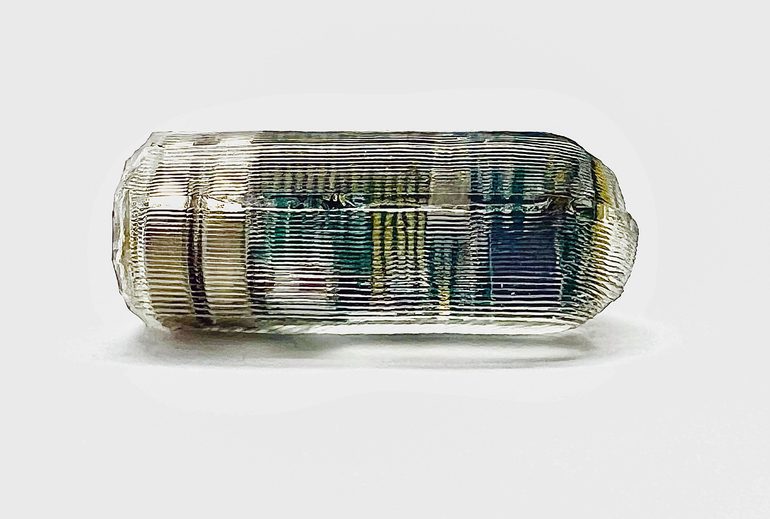
Researchers at the Harvard Wyss Institute and the Dana-Farber Cancer Institute have developed a new method to prepare chimeric antigen receptor-T cells (CAR-T cells) for leukemia patients that could result in more effective treatment. CAR-T cells start life as T cells that are isolated from cancer patients, are stimulated and primed to recognize and attack cancer cells, expanded in number, and then reintroduced to the cancer patient with the goal that the cells will destroy their cancer. However, the technique works better in certain patients, and the researchers behind this latest technique have realized that T-cells from cancer patients do […]…

Continue Reading

What the metaverse and virtual reality can contribute to healthcare

What the metaverse and virtual reality can contribute to healthcare

The so-called metaverse and virtual reality are up-and-coming technologies that could offer healthcare quite a bit.Medical practitioners can test out the effectiveness of new surgical methods in the metaverse before attempting on real patients. And as an extension of telehealth, medical professionals can use virtual reality to access patients and examine them virtually.
What exactly is the metaverse? How does virtual reality work? What can they contribute to healthcare? And where will these technologies offer innovations in the years to come?
To get answers to these questions, we sat down with Pari Natarajan, CEO of Zinnov, a global management and consulting firm focusing…

Continue Reading
Is Interoperability Tech Worth the Investment? Experts Say Yes for 3 Reasons

Is Interoperability Tech Worth the Investment? Experts Say Yes for 3 Reasons

Editor’s note: This story is based on discussions at Abarca Forward, a conference in San Juan, Puerto Rico, hosted by Abarca, a pharmacy benefit manager. MedCity News’ Editor-in-Chief Arundhati Parmar and Senior Reporter Katie Adams were invited to attend and speak at the conference. All travel and related expenses for the team were covered by Abarca. However, company officials had no input in editorial coverage. 
In order for the U.S. healthcare system to operate smoothly, various stakeholders must cooperate with one another and share data seamlessly. But this notion is far from being achieved — the industry is still seriously plagued by…

Continue Reading
Demo of the LG TV Integration with Amwell

Demo of the LG TV Integration with Amwell

At a recent conference, I had a chance to chat with Atul Singh, General Manager, Digital Health at LG Electronics about their relatively recent virtual care solution with Amwell. It makes a lot of sense why Amwell and LG would want to work together. Many hospitals and healthcare organizations have already installed LG TVs in their organizations or they will as they build new hospitals or update their existing exam rooms. Those TVs often act as a hub of information for a patient and increasingly are becoming a patients connection with their nurses and doctors.Given that final piece, LG and Amwell…

Continue Reading
‘A Mindset Shift’: How Senior Care Communities Adapt to Modern Tech Expectations

‘A Mindset Shift’: How Senior Care Communities Adapt to Modern Tech Expectations

Glen Tibbitts, United Church Homes’ Corporate Director of IT and HIPAA Security Officer, says he’s noticed a “mindset shift” as residents’ expectations change. Photography by Leonardo Carrizo
“Otherwise, you’ll see people with a device that’s still in the box,” he says. “People will tend to engage with technology if they feel they have agency in the process. That’s really important.”
Looking ahead, UCH is piloting a number of clinical and lifestyle technologies, including a smart badge that transcribes the speech of employees and family members for deaf patients.
“It’s all about abundant life and abundant aging,” Tibbitts says. “We want to make the move…

Continue Reading
RTLS & AI: Solving the Riddle of Healthcare Inefficiency

RTLS & AI: Solving the Riddle of Healthcare Inefficiency

The following is a guest article by Steven Manifold, CMO at Ubisense.
Many healthcare systems around the world are overburdened. Some face the lingering effects of COVID-19, while others lack funding and staff. Healthcare providers are increasingly turning to technology to help shoulder these burdens, but are fancy tech deployments really the cure or just another placebo?   
RTLS
RTLS (Real-time Location Systems) are not new technologies, but they remain uncommon in most healthcare settings. Popular in automotive, aerospace, and general manufacturing and logistics industries, they have paved the way towards smarter, more efficient industrial practices while contributing to the much vaulted “Industry 4.0” revolution….

Continue Reading
Retail disruptors face big strategy questions in 2023, says AHA

Retail disruptors face big strategy questions in 2023, says AHA

A new report from the American Hospital Association Center for Health Innovation explores how retail companies and tech giants like Apple and Google will drive transformational change in healthcare delivery in 2023 and beyond.WHY IT MATTERS
With billions of dollars invested this past year, such as CVS Health’s purchase of Signify Health, the AHA report highlights retail healthcare companies having grabbed significant market share in primary care, concierge medicine, virtual care and in-home medical services. 
They’ve also broadened their reach into pharmacy benefits management, behavioral health and other areas, said AHA researchers in the report.
One example is Amazon. While the company is in the process of buying…

Continue Reading
3 Conditions that Must be Met to Make Interoperability a Reality

3 Conditions that Must be Met to Make Interoperability a Reality

The term “interoperability” holds different meanings for different people. While we all would agree that the primary goal of interoperability is to make sharing data easier in order to improve outcomes and lower costs, there are varying perceptions about what that looks like. FHIR has been great at giving us a common set of protocols and standards to work from, but how we connect and how data actually gets shared are still open challenges.
In a truly interoperable healthcare ecosystem, I strongly believe data wouldn’t need to be requested, aggregated, and validated each time it’s needed. And it wouldn’t be limited to specific…

Continue Reading
Ingestible Sensor Reveals Gastric Motility

Ingestible Sensor Reveals Gastric Motility

Researchers at MIT have developed an ingestible sensor that can reveal gastrointestinal motility issues, such as gastroparesis and gastroesophageal reflux disease. The technology is intended for use as an easy at-home method to diagnose such issues, which typically require more invasive and inconvenient procedures, such as endoscopy or X-ray imaging. This new technology is based on the concept that a magnetic field produced by an electromagnetic coil becomes weaker the further away you move from the coil. This change in field signal is predictable, allowing researchers to calculate the distance accurately by measuring the magnetic field. The ingestible sensor measures […]…

Continue Reading