





What Is PHI, and How Can Healthcare Organizations Keep It Secure?

What Is PHI, and How Can Healthcare Organizations Keep It Secure?

What Is Protected Health Information?According to UC Berkeley’s Human Research Protection Program, PHI includes any information found in medical records or clinical data sets that can be used to identify an individual. In addition, this information must have been collected, used or disclosed while providing a healthcare service. PHI can be used during the diagnosis or treatment of a patient or in clinical research processes.
The HIPAA Privacy Rule and Security Rule require the protection of identifiable health information, such as:
Information collected by doctors, nurses and other healthcare providers in the medical record
Conversations between doctors and other healthcare providers about a patient’s…


Continue Reading
GSK’s Covid-19 Valentine to Vir Biotech: ‘You Can Go Your Own Way’

GSK’s Covid-19 Valentine to Vir Biotech: ‘You Can Go Your Own Way’

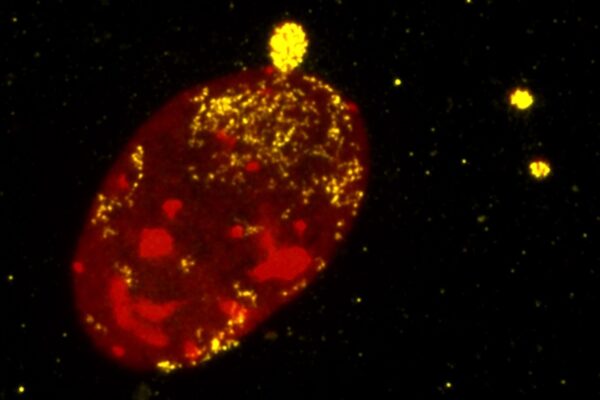
Vir Biotechnology’s Covid-19 research may yield more drugs and perhaps a vaccine, but no longer with the financial support of GSK. The collaboration agreement the two companies struck up in the early days of the pandemic has been amended, leaving Vir to either find another partner or continue its coronavirus research on its own.
The alliance did successfully develop the Covid-19 drug sotrovimab. GSK and Vir will continue to share responsibilities for that drug, which is available under the brand name Xevudy in more than 40 countries. The U.S. is no longer one of them. Last April, the FDA withdrew emergency authorization…

Continue Reading
Automated Feeding Platform to Study Mosquito Disease Transmission

Automated Feeding Platform to Study Mosquito Disease Transmission

A team at Rice University has developed an automated feeding platform for mosquitoes that allows researchers to test different types of repellent and investigate mosquito-borne disease transmission. Traditionally, such mosquito research would require human volunteers or animal subjects for the mosquitos to feed on, but this is obviously inconvenient and a little distasteful. This new system dispenses with the need for human volunteers and associated laborious data collection and analysis. The technology consists of 3D printed synthetic skin with real blood that flows through small vessels. Mosquitos can feed through the skin and are kept in place in a surrounding […]…

Continue Reading
Electrochemical Sensor for Detailed SARS-CoV-2 Immunity Data

Electrochemical Sensor for Detailed SARS-CoV-2 Immunity Data

Researchers at the Harvard Wyss Institute have developed an electrochemical device, called the eRapid sensor, that can assist clinicians in quickly characterizing someone’s COVID-19 infection, including identifying the infecting viral variant and the nature of someone’s immunity to the virus in terms of whether it is vaccine-mediated or natural immunity. Monitoring these characteristics could help to personalize treatment for individuals and also provide data for drug development and inform government decisions on the best way to manage COVID-19 in the community. When antibodies from a blood sample bind within the device, it precipitates a biochemical cascade that affects the electrical […]…

Continue Reading
Nanowire Assay Detects Brain Tumors from Urine

Nanowire Assay Detects Brain Tumors from Urine

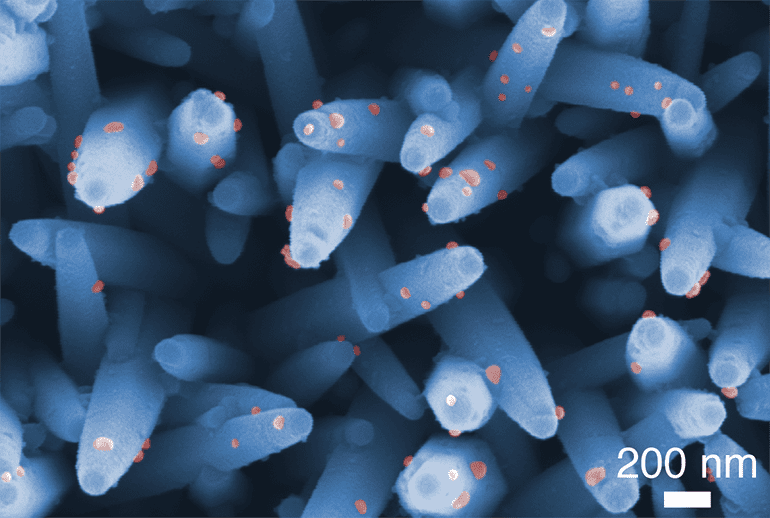
Researchers at Nagoya University in Japan have developed a nanowire assay that can be used to capture and detect specific extracellular vesicles in a urine sample that indicate the presence of a brain tumor. These extracellular vesicles are naturally excreted in the urine but techniques to capture and analyze them have been complex, requiring different pieces of equipment, until now. This all-in-one assay uses a simple well plate that has been coated with zinc oxide nanowires that extracellular vesicles are attracted to because of their surface electrical charge. Then, the researchers can detect tumor-specific extracellular vesicles in each well using […]…

Continue Reading
Adverse Survival Signal Leads G1 to Stop Pivotal Test in Colorectal Cancer

Adverse Survival Signal Leads G1 to Stop Pivotal Test in Colorectal Cancer

G1 Therapeutics’ approach to cancer does not kill tumors. Instead, the biotech’s drug, trilaciclib, protects bone marrow from the damaging effects of chemotherapy, reducing the duration and severity of the problems that can limit the use of this cancer treatment. Since trilaciclib’s initial approval insmall cell lung cancer, G1 has pursued more clinical trials that could support expanding the drug to other cancers. Colorectal cancer will no longer be one of them.
On Monday, G1 reported preliminary data showing that the placebo group outperformed the trilaciclib arm in helping patients live longer. G1 said it has decided to stop the colorectal cancer…

Continue Reading
3D Bioengineered Skin Grafts Fit Complex Anatomy

3D Bioengineered Skin Grafts Fit Complex Anatomy

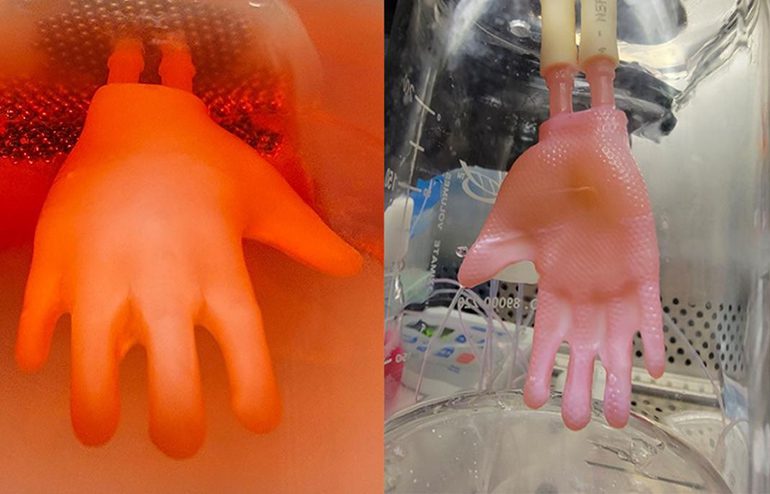
Researchers at Columbia University’s Irving Medical Center have developed a method to create three-dimensional bioengineered skin grafts. To date, bioengineered skin is typically created in flat sheets. However, these are difficult to fit to complex anatomy, such as the hand, and so these researchers have designed a more sophisticated technique that combines laser scanning, 3D printing, and cell culture to create seamless three dimensional skin grafts. For instance, the researchers have already created a skin “glove” that could be useful in replacing skin on the hands by simply slipping it over the hand (just like a glove). Replacing skin that has…

Continue Reading
Mining EHR data to understand documentation burnout

Mining EHR data to understand documentation burnout

The Office of the National Coordinator for Health Information found that hospitals’ access and analysis of documentation data in electronic health records has increased over the past five years, but gaps in access and use remain for some hospitals.WHY IT MATTERSData from EHRs can track the time clinicians spend documenting and carrying out certain tasks. To measure physician burden on a national scale, ONC analyzed four waves of a nationally representative survey of U.S. non-federal acute care hospitals.
Published in January, in the special health IT issue of the American Journal of Managed Care, Trends in Electronic Health Record Capabilities for Tracking…

Continue Reading
6 Ways - How #AI Can Help in the #Healthcare Industry

6 Ways – How #AI Can Help in the #Healthcare Industry

AI is rapidly #revolutionising the #healthcare #industry #worldwide – continuously learning and adapting.- Identifying the potential impact of a drug- Helps in making better-informed decisions- Helps in the early #diagnosis of a #disease- Improves other #technologies like #AR and #VR also- It helps in the #research and discovery of #medicines- It helps in #identifying the right candidates for #clinical trialsView more about #digital #transformation #trends at: https://www.emedhealthtech.com/6-healthcare-digital-transformation-trends-2022/#digitalhealth #healthsoftware #healthapp #Blockchain #ml #rpa #healthcareit #telehealth…

Continue Reading
How Spiritual Care Impacts the Mental Health of Family Caregivers

How Spiritual Care Impacts the Mental Health of Family Caregivers

– Acting as a family caregiver, who often takes on the role of surrogate decision-maker, can lead to elevated stress and anxiety caused by the patient prognosis and complex medical decisions needed to be made. According to a recent Regenstrief Institute study, spiritual care interventions can effectively support the mental health and well-being of family caregivers. Family caregivers in the intensive care unit (ICU) will make critical healthcare decisions on behalf of patients who may be incapacitated or critically ill and unable to make their own decisions. The study, published in the Journal of Pain and Symptom Management, examined the well-being…

Continue Reading