





The Path Forward for Healthcare’s People Matching Problem

The Path Forward for Healthcare’s People Matching Problem

The following is a guest article by Rachel Podczervinski MS, RHIA, Vice President of Professional Services at Harris Data Integrity Solutions.
Efforts to identify the right path forward for healthcare’s patient matching problem are gaining a foothold as stakeholders from across the spectrum come together to remove obstacles and implement effective solutions. Most notably, in 2022, efforts by industry organizations like Patient ID Now led to the temporary removal of Section 510 from the U.S. House and Senate Labor, Health and Human Services, Education, and Related Agencies (Labor-HHS) appropriations bills. While it was ultimately reinserted in the final version, its initial removal…


Continue Reading
MD Anderson’s Tech Puts Replay on Fast Path to Clinic With TCR NK Cell Therapies

MD Anderson’s Tech Puts Replay on Fast Path to Clinic With TCR NK Cell Therapies

A slew of biotech companies are pursuing research that could overcome limitations of current cell therapies. Startup creator Replay has a new subsidiary pushing toward the front of the pack with a therapeutic candidate on track to start its first human test this summer—about one year after Replay emerged from stealth. It owes this rapid progress to a cell therapy pioneer’s technology that has already been de-risked by a big pharmaceutical company.
Replay calls itself a genome writing company. With operations split between San Diego and London, the private equity-backed business launched last July with $55 million and a suite of technologies…

Continue Reading
Veradigm, Healthverity Uses Registry Data for Chronic Disease Research

Veradigm, Healthverity Uses Registry Data for Chronic Disease Research

February 14, 2023 – Health IT vendor Veradigm, formerly Allscripts, announced a collaboration with healthcare data ecosystem HealthVerity that will leverage registry data to advance chronic disease research. The partnership will bridge Veradigm’s cardiology and metabolic registries with consumer data collected by HealthVerity, offering clinical researchers access to research-ready data. The Veradigm Cardiology Registry boasts over 102 million patient records representing more than 19.9 million unique patients, making it one of the largest outpatient cardiovascular quality improvement registries. The registry follows cardiac patients over time, monitoring essential measures such as demographics, plan of care, cardiac events and comorbidities, exams, procedures, lab…

Continue Reading
Acoustic Stimulation for Insomnia

Acoustic Stimulation for Insomnia

Researchers at Wake Forest University School of Medicine have tested a closed-loop acoustic stimulation neurotechnology in its ability to treat insomnia. The device in question has been developed by Cereset, a medtech company headquartered in Arizona. Insomnia is not just unpleasant, but can have significant long-term health consequences, including an increased risk of cardiovascular disease, obesity, and diabetes. This technology works by monitoring brain waves through scalp sensors and then translating these waves into auditory tones that are played back to the wearer through ear buds. The researchers describe the technology as “allowing the brain to listen to itself”, leading […]…

Continue Reading
Self-Assembling Peptides as a Bioink

Self-Assembling Peptides as a Bioink

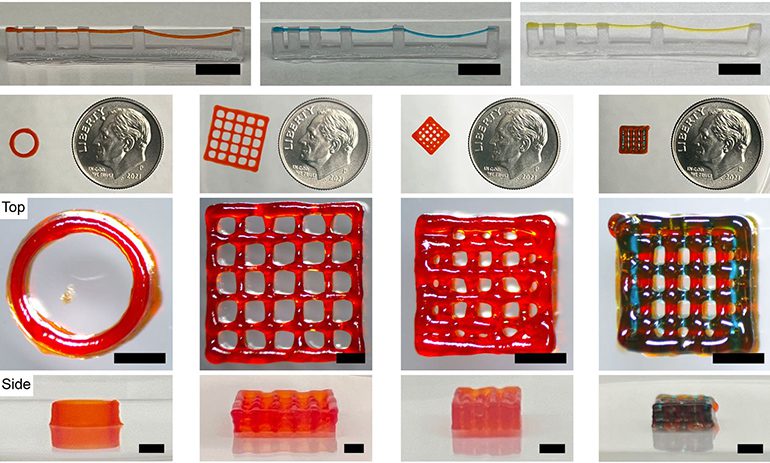
Researchers at Rice University have developed a bioprinting method that uses self-assembling peptides as a bioink. The technique involves using “multidomain peptides” that are hydrophobic at one end and hydrophilic at the other. When the peptides encounter water, they flip over each other to create hydrophobic sandwich structures that stack together to form fibers, creating the base structure of the printed hydrogel. This self-assembly helps the printed material to rapidly form a structure, and it will also reform after deformation. What makes the peptides highly suited for use in implanted constructs is their track record of safe use in the […]…

Continue Reading
Why healthcare leaders should embrace home-based technologies

Why healthcare leaders should embrace home-based technologies

Home health technologies will have an increasingly larger role to play in healthcare delivery as the silver tsunami of the aging population strain the system. And if more consumers embrace preventative care that can easily be done in the home.It’s important to understand that home health technologies are leveraged in home health settings by clinicians for home health patients, and at-home or home-based health technologies are diagnostic and/or screening tools that can be used in non-clinical settings for the purpose of understanding overall health conditions.
Home-based health technologies are any preventive care technology tool that elevates health. This includes tools like blood…

Continue Reading
5 Biggest Healthcare MVP Challenges

5 Biggest Healthcare MVP Challenges

The healthcare industry currently faces many challenges, from meeting ever-changing patient demands to dealing with cyberattacks. The demand for efficient and secure IT solutions has never been greater. Healthcare MVPs are becoming increasingly popular as they offer a cost-effective way to bring innovative solutions to the market. However, they come with their own set of challenges to overcome.

Healthcare organizations need to develop products that meet the needs of their patients while providing a safe environment. We know that MVP is a great way to start because it gives you the opportunity to validate your idea fast, test the market…

Continue Reading
Indian healthcare chiefs doubt their cybersecurity capability: report

Indian healthcare chiefs doubt their cybersecurity capability: report

A new survey report in India has gauged the stances of healthcare leaders on their use of technology in an effort to yield operational efficiencies, enhance service delivery, and improve health outcomes. More than 50 respondents, who are mostly chief executives of multi-site hospitals based in metropolitan cities, were polled by Grant Thornton Bharat and the Association of Healthcare Providers (India) in the said report titled “Technology transformation for future-ready healthcare.”
FINDINGS
The survey revealed that around eight in 10 respondents are increasing their digital and technology budget in the next 12 months. One major area of investment is 5G technology, which is noted for…

Continue Reading
Where Are All the Patients?

Where Are All the Patients?

It’s no secret that patient enrollment is one of clinical research’s biggest hurdles. According to an analysis of trials listed, 55% of terminated trials were ended because of low patient enrollment. The analysis also reported that Phase III and Phase IV trials have an enrollment efficiency of less than 40%. Yet another analysis found more than 80% of studies do not enroll on time, often leading to a study extension or additional research sites.
The problem isn’t just enrollment, it’s also the enrollment of diverse patients. Racial and ethnic minorities, specifically Black or African American, Hispanic/Latino, Indigenous and Native American, Asian, Native…

Continue Reading