



Federal agencies offer updates on TEFCA, interoperability milestones

Federal agencies offer updates on TEFCA, interoperability milestones

On February 13, the government leaders thanked the Office of the National Coordinator for Health IT and six Qualified Health Information Networks (QHIN) for working to create a nationwide interoperability network under the 21st Century Cures Act. The ‘Network of Networks’ 
At the U.S. Department of Health and Human services, Secretary Xavier Becerra presented certificates of recognition to the CommonWell Health Alliance, eHealth Exchange, Epic TEFCA Interoperability Services, Health Gorilla, Kno2 and KONZA for moving into the pre-production testing process of the Trusted Exchange Framework and the Common Agreement.
With the framework, ONC and the Sequoia Project, TEFCA’s recognized coordinating entity, seek to establish…


Continue Reading
Epic, eHealth Exchange and CommonWell among HHS-approved QHIN candidates

Epic, eHealth Exchange and CommonWell among HHS-approved QHIN candidates

A half-dozen organizations on Monday were approved by the Department of Health and Human Services as the inaugural batch of candidates to participate as qualified health information networks as part of ONC’s Trusted Exchange Framework and Common Agreement.During a Feb. 13 event at the U.S. Department of Health and Human Services, six healthcare organizations were approved to implement TEFCA as prospective QHINs: CommonWell Health Alliance, eHealth Exchange, Epic TEFCA Interoperability Services, Health Gorilla, Kno2, and KONZA National Network.
In a blog post, National Coordinator for Health IT Micky Tripathi recognized those organizations, “for their willingness to voluntarily step up and meet the…

Continue Reading
95% of Certified Health IT Developers Met ONC Cures Act Deadline

95% of Certified Health IT Developers Met ONC Cures Act Deadline

– More than 95 percent of certified health IT developers met the Cures Act Final Rule compliance deadline to provide customers with new technology, according to an ONC HealthITBuzz blog post. The Cures Act Final Rule mandated many changes to the Certification Program, including four updates set to have long-lasting interoperability impacts on patients, clinicians, and developers. ONC Certified Health IT developers must: Advance interoperability for patients and providers through the use of FHIR-based application programming interfaces (APIs);Enable patients, providers, and other stakeholders to have access to consistent data elements represented in at least version one of the United States Core…

Continue Reading
Mining EHR data to understand documentation burnout

Mining EHR data to understand documentation burnout

The Office of the National Coordinator for Health Information found that hospitals’ access and analysis of documentation data in electronic health records has increased over the past five years, but gaps in access and use remain for some hospitals.WHY IT MATTERSData from EHRs can track the time clinicians spend documenting and carrying out certain tasks. To measure physician burden on a national scale, ONC analyzed four waves of a nationally representative survey of U.S. non-federal acute care hospitals.
Published in January, in the special health IT issue of the American Journal of Managed Care, Trends in Electronic Health Record Capabilities for Tracking…

Continue Reading
How Spiritual Care Impacts the Mental Health of Family Caregivers

How Spiritual Care Impacts the Mental Health of Family Caregivers

– Acting as a family caregiver, who often takes on the role of surrogate decision-maker, can lead to elevated stress and anxiety caused by the patient prognosis and complex medical decisions needed to be made. According to a recent Regenstrief Institute study, spiritual care interventions can effectively support the mental health and well-being of family caregivers. Family caregivers in the intensive care unit (ICU) will make critical healthcare decisions on behalf of patients who may be incapacitated or critically ill and unable to make their own decisions. The study, published in the Journal of Pain and Symptom Management, examined the well-being…

Continue Reading
How Technology Is Improving Healthcare

How Technology Is Improving Healthcare

The world of healthcare is rapidly changing, and technology is playing an increasingly important role in the industry. From smart devices that can detect symptoms early on to remote patient monitoring, technology is allowing healthcare professionals to provide better care than ever before. Let’s take a look at some of how technology is revolutionizing healthcare today.
Healthcare and Smart Technology
Smart technology for healthcare has made it easier for doctors and patients to communicate and monitor health conditions more closely. Smartwatches and wristbands can now track vital signs like heart rate, oxygen levels, sleep patterns, and more. This information can be…

Continue Reading
Healthcare systems could face new DPRK ransomware tactics

Healthcare systems could face new DPRK ransomware tactics

Government agencies from the United States and the Republic of Korea are highlighting new ransomware tactics they’ve seen, which they say are used to conceal the affiliation of Democratic People’s Republic of Korea hackers working to stage attacks against U.S. and South Korean healthcare organizations and critical infrastructure.WHY IT MATTERS
The new cybersecurity advisory, Ransomware attacks on critical infrastructure fund DPRK malicious cyber activities, details both North Korea’s historically and recently observed tactics, techniques and procedures and indicators of compromise.
The additional observed TTPs “span phases from acquiring and purchasing infrastructure to concealing DPRK affiliation,” according to the United States National Security Agency, the Federal…

Continue Reading
Community Clinics Look to EHR Implementation to up Patient Experience

Community Clinics Look to EHR Implementation to up Patient Experience

– Texas-based Legacy Community Health Clinic has announced it will transition from its outdated legacy system and move forward with an EHR implementation that will drive the patient experience while improving patient data access. The project, funded by a $1 million federal grant, will connect the health clinic’s 55 locations through one system and provide over 200,000 patients with continual data access. Providing patients access to their medical records was challenging for the community health providers, who previously had to fax health information. Faxed patient health data often sits on the fax machine for hours or even days before it gets…

Continue Reading
Leveraging EHR Audit Logs to Inform Clinician Burnout Interventions

Leveraging EHR Audit Logs to Inform Clinician Burnout Interventions

– Healthcare organizations are continually looking for ways to tackle increasing clinician burnout with documentation burden at the forefront of their concerns. To better understand clinician workflow challenges, practices can leverage EHR audit logs to capture documentation behaviors and inform clinician burnout interventions, according to an ONC HealthITBuzz blog post. EHR audit logs are automated tracking features that monitor clinician activity within the EHR. Specifically, the automated tool can track the time clinicians spend documenting and carrying out certain tasks, such as chart reviews and messaging. Continuous monitoring of the EHR burden is needed to address any upcoming burnout challenges and…

Continue Reading
Singapore General Hospital shifts to gamified VR nurse training

Singapore General Hospital shifts to gamified VR nurse training

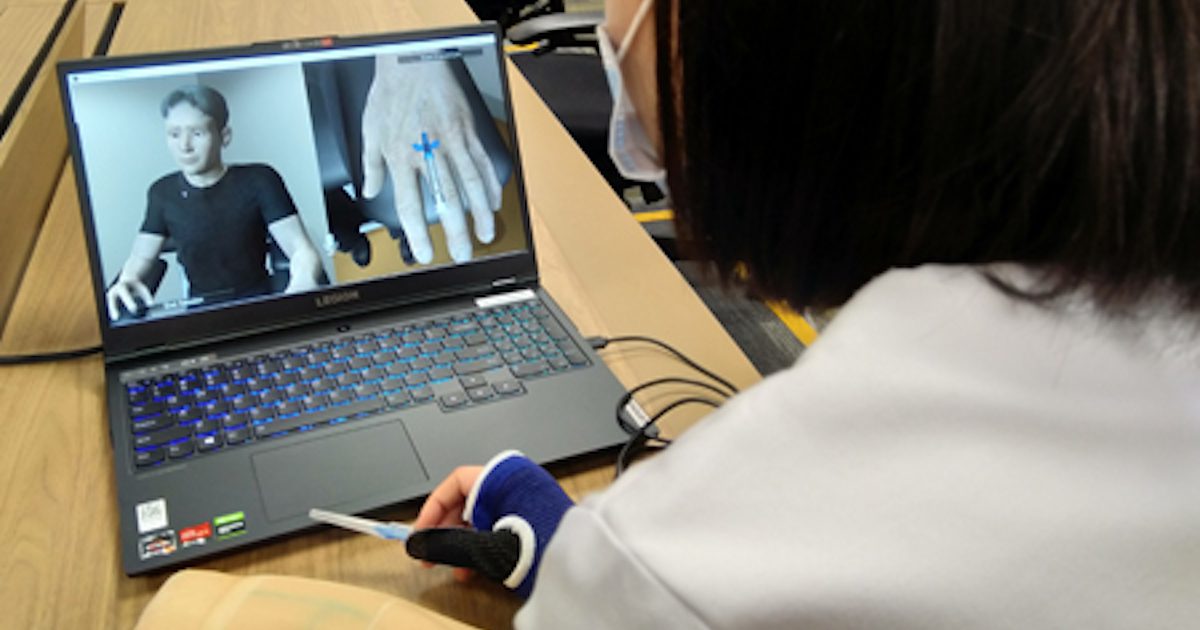
The Singapore General Hospital has started training its nurses in IV cannulation using VR technology.A team of SGH nurses, together with Serious Games Asia and sensor solutions developer Microtube Technologies, developed an immersive gamified training module called IV NIMBLE (Nursing Innovation in Mobility-based Learning) to enhance nurses’ training.
The module comprises a virtual patient avatar with which nurses can practice talking; a 3D-printed hand which mimics the texture of human skin; and a pressure sensor glove that gauges the pressure of cannulation. It also captures and presents data via an analytics dashboard for review.
First tried out six months ago by about 120 SGH nurses,…

Continue Reading