





We’re Feeling the Effects of the Nursing Shortage. Technology Can Help.

We’re Feeling the Effects of the Nursing Shortage. Technology Can Help.

The healthcare industry is in desperate need of nurses — and fast. Chances are this isn’t news to you. You’ve seen the countless headlines covering the impact the pandemic has had on nurses, and how that nursing shortage has impacted employment numbers, healthcare facilities, and patient care.
Nurses are burnt out. They’re stressed, exhausted, and struggling to find adequate mental health support. But the pandemic isn’t the only issue to blame. Experts are predicting that over 1 million RNs will likely retire by 2030, which will only add to the heaviness of the nursing shortage. An overly-stressed out and aging workforce of…


Continue Reading
Where Are All the Patients?

Where Are All the Patients?

It’s no secret that patient enrollment is one of clinical research’s biggest hurdles. According to an analysis of trials listed, 55% of terminated trials were ended because of low patient enrollment. The analysis also reported that Phase III and Phase IV trials have an enrollment efficiency of less than 40%. Yet another analysis found more than 80% of studies do not enroll on time, often leading to a study extension or additional research sites.
The problem isn’t just enrollment, it’s also the enrollment of diverse patients. Racial and ethnic minorities, specifically Black or African American, Hispanic/Latino, Indigenous and Native American, Asian, Native…

Continue Reading
What Is PHI, and How Can Healthcare Organizations Keep It Secure?

What Is PHI, and How Can Healthcare Organizations Keep It Secure?

What Is Protected Health Information?According to UC Berkeley’s Human Research Protection Program, PHI includes any information found in medical records or clinical data sets that can be used to identify an individual. In addition, this information must have been collected, used or disclosed while providing a healthcare service. PHI can be used during the diagnosis or treatment of a patient or in clinical research processes.
The HIPAA Privacy Rule and Security Rule require the protection of identifiable health information, such as:
Information collected by doctors, nurses and other healthcare providers in the medical record
Conversations between doctors and other healthcare providers about a patient’s…

Continue Reading
HeartBeam: The First 12-lead medical grade heart attack detection that’s personal, portable, and easy-to-use

HeartBeam: The First 12-lead medical grade heart attack detection that’s personal, portable, and easy-to-use

Branislav Vajdic, PhD, and the Chief Executive Officer and Founder of HeartBeam, Inc. joins eHealth Radio and the Heart Health and Health News Channels. HeartBeam is the first 12-lead medical grade heart attack detection that’s personal, portable, and easy-to-use.
Listen to interview with host Eric Michaels and guest Dr. Branislav Vajdic discuss the following:
Please tell us about your background and why you launched HeartBeam. We’d love to hear more about how this device is being used for the first time outside of a medical setting, and what makes it different from what’s currently available.
According to the American Heart Association, more people die…

Continue Reading
Automated Feeding Platform to Study Mosquito Disease Transmission

Automated Feeding Platform to Study Mosquito Disease Transmission

A team at Rice University has developed an automated feeding platform for mosquitoes that allows researchers to test different types of repellent and investigate mosquito-borne disease transmission. Traditionally, such mosquito research would require human volunteers or animal subjects for the mosquitos to feed on, but this is obviously inconvenient and a little distasteful. This new system dispenses with the need for human volunteers and associated laborious data collection and analysis. The technology consists of 3D printed synthetic skin with real blood that flows through small vessels. Mosquitos can feed through the skin and are kept in place in a surrounding […]…

Continue Reading
Nanowire Assay Detects Brain Tumors from Urine

Nanowire Assay Detects Brain Tumors from Urine

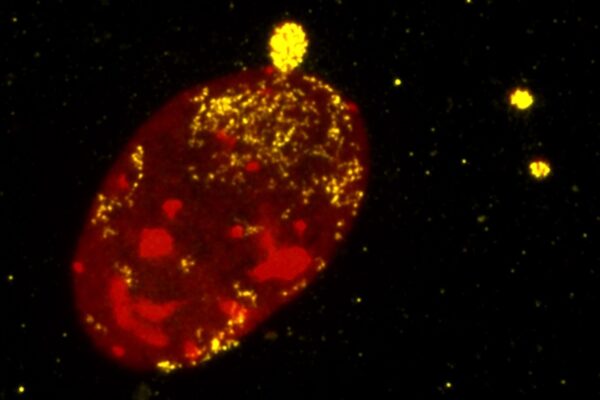
Researchers at Nagoya University in Japan have developed a nanowire assay that can be used to capture and detect specific extracellular vesicles in a urine sample that indicate the presence of a brain tumor. These extracellular vesicles are naturally excreted in the urine but techniques to capture and analyze them have been complex, requiring different pieces of equipment, until now. This all-in-one assay uses a simple well plate that has been coated with zinc oxide nanowires that extracellular vesicles are attracted to because of their surface electrical charge. Then, the researchers can detect tumor-specific extracellular vesicles in each well using […]…

Continue Reading
How Mental Healthcare Access can Improve to Meet Patient Needs

How Mental Healthcare Access can Improve to Meet Patient Needs

– Meeting patient needs for mental healthcare access will require industry leaders, clinicians, and healthcare policymakers to focus on giving clinicians the tools needed to meet patients in any care setting, as well as enable more ample access to mental healthcare providers, according to a new paper from the Alliance for Patient Access (AfPA). More patients than ever are seeking mental healthcare, with AfPA citing figures that 53 million Americans now live with some kind of mental illness. Exacerbated by the COVID-19 pandemic, this prevalence of mental illness has pushed the mental health space to face unheard-of patient demand. But patients…

Continue Reading
Adverse Survival Signal Leads G1 to Stop Pivotal Test in Colorectal Cancer

Adverse Survival Signal Leads G1 to Stop Pivotal Test in Colorectal Cancer

G1 Therapeutics’ approach to cancer does not kill tumors. Instead, the biotech’s drug, trilaciclib, protects bone marrow from the damaging effects of chemotherapy, reducing the duration and severity of the problems that can limit the use of this cancer treatment. Since trilaciclib’s initial approval insmall cell lung cancer, G1 has pursued more clinical trials that could support expanding the drug to other cancers. Colorectal cancer will no longer be one of them.
On Monday, G1 reported preliminary data showing that the placebo group outperformed the trilaciclib arm in helping patients live longer. G1 said it has decided to stop the colorectal cancer…

Continue Reading
The Real Reason Patients Continue to Defer Care

The Real Reason Patients Continue to Defer Care

It’s no secret that patient volumes in 2022 were below expectations. NRC Health, recently found that 27% of patients are actively deferring their care in 2022. Why are so many patients putting off their care? The primary reason in 2022 was not fear of COVID-19. Instead, it was financial concerns that kept patients away. Until healthcare organizations address this, patients may continue to defer their care. Healthcare IT Today sat down with Ryan Donohue, Strategic Advisor at NRC Health, to dig deeper into the company’s findings and to discuss how healthcare organizations can motivate patients to return. Learn more about NRC…

Continue Reading
3D Bioengineered Skin Grafts Fit Complex Anatomy

3D Bioengineered Skin Grafts Fit Complex Anatomy

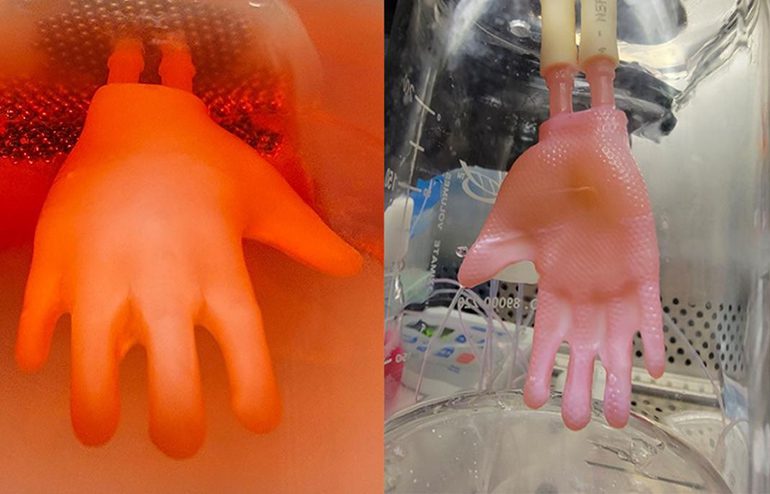
Researchers at Columbia University’s Irving Medical Center have developed a method to create three-dimensional bioengineered skin grafts. To date, bioengineered skin is typically created in flat sheets. However, these are difficult to fit to complex anatomy, such as the hand, and so these researchers have designed a more sophisticated technique that combines laser scanning, 3D printing, and cell culture to create seamless three dimensional skin grafts. For instance, the researchers have already created a skin “glove” that could be useful in replacing skin on the hands by simply slipping it over the hand (just like a glove). Replacing skin that has…

Continue Reading