





Cell Therapy Biotech Talaris Ends Two Kidney Transplant Trials, Restructures

Cell Therapy Biotech Talaris Ends Two Kidney Transplant Trials, Restructures

Talaris Therapeutics aimed to transform solid organ transplants with a cell therapy that replaces anti-rejection drugs patients need for the rest of their lives. But after clinical trial setbacks, the biotech has decided to end two kidney transplant studies. Although a separate test of its experimental therapy is continuing in a rare autoimmune condition, Talaris has commenced a restructuring plan that it said could culminate in a merger or sale of the company.
The restructuring announced Thursday will lead to the layoff of about one-third of Talaris’s staff. As of the end of the third quarter of 2022, the Louisville, Kentucky-based biotech…

Continue Reading
Report: Pharma R&D ROI Falls to Lowest Level in 13 Years

Report: Pharma R&D ROI Falls to Lowest Level in 13 Years

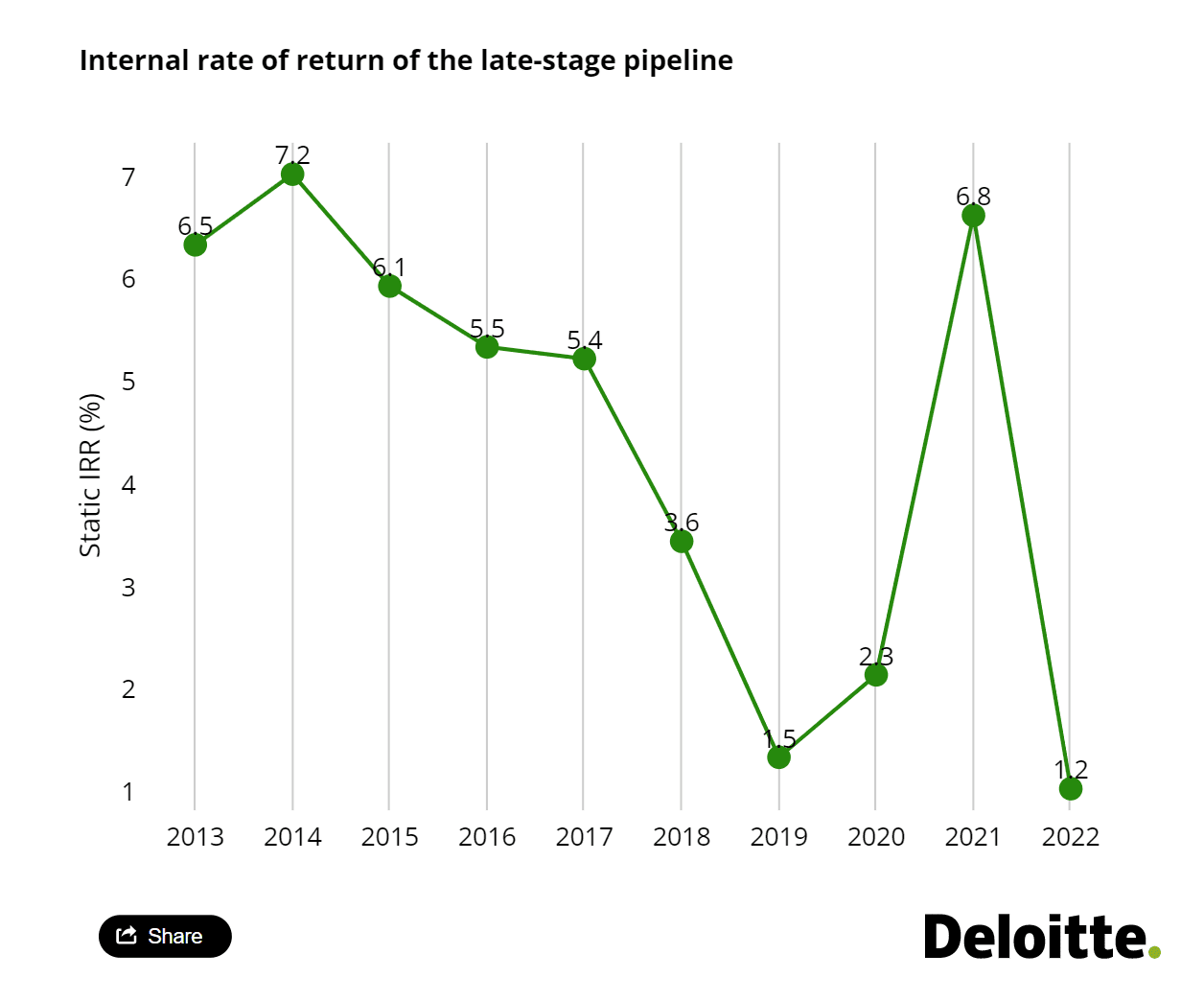
What You Should Know:– Deloitte Centre for Health Solutions releases its thirteenth annual report, ‘Seize the Digital Momentum: Measuring the return from pharmaceutical innovation 2022’ that explores the performance of the biopharmaceutical industry (bio Pharma) and its ability to generate returns from investment in innovative new medicines.– Since 2021, much of the world has successfully adjusted to life where COVID-19 is more endemic as vaccines and treatments reduced the risk and severity of illness, however geopolitical turmoil and a global cost-of-living crisis have continued to drive serious instability in the health landscape.Pharmaceutical Innovation – Trends and Insights At a GlanceThis is…

Continue Reading
Heartpoint Global Hopes To Disrupt Congenital Pulmonary Hypertension Treatment With Minimally Invasive Device

Heartpoint Global Hopes To Disrupt Congenital Pulmonary Hypertension Treatment With Minimally Invasive Device

To correct high blood pressure of the pulmonary artery, which can arise from congenital defects of the heart, an artificial heart ucan cost upwards of $190,000. Heart disease accounted for about one in five deaths in 2020 in theUnited States.
Even minimally invasive pulmonary artery banding — a surgical technique that has been in use since Harry Truman was president — requires access to the chest cavity. A new treatment under development by HeartPoint Global seeks to provide a minimally invasive alternative to current treatments for pulmonary arterial hypertension associated with Congenital Heart Disease.A device delivered through the leg would cost only…

Continue Reading
Where Are All the Patients?

Where Are All the Patients?

It’s no secret that patient enrollment is one of clinical research’s biggest hurdles. According to an analysis of trials listed, 55% of terminated trials were ended because of low patient enrollment. The analysis also reported that Phase III and Phase IV trials have an enrollment efficiency of less than 40%. Yet another analysis found more than 80% of studies do not enroll on time, often leading to a study extension or additional research sites.
The problem isn’t just enrollment, it’s also the enrollment of diverse patients. Racial and ethnic minorities, specifically Black or African American, Hispanic/Latino, Indigenous and Native American, Asian, Native…

Continue Reading
Adverse Survival Signal Leads G1 to Stop Pivotal Test in Colorectal Cancer

Adverse Survival Signal Leads G1 to Stop Pivotal Test in Colorectal Cancer

G1 Therapeutics’ approach to cancer does not kill tumors. Instead, the biotech’s drug, trilaciclib, protects bone marrow from the damaging effects of chemotherapy, reducing the duration and severity of the problems that can limit the use of this cancer treatment. Since trilaciclib’s initial approval insmall cell lung cancer, G1 has pursued more clinical trials that could support expanding the drug to other cancers. Colorectal cancer will no longer be one of them.
On Monday, G1 reported preliminary data showing that the placebo group outperformed the trilaciclib arm in helping patients live longer. G1 said it has decided to stop the colorectal cancer…

Continue Reading
6 Ways - How #AI Can Help in the #Healthcare Industry

6 Ways – How #AI Can Help in the #Healthcare Industry

AI is rapidly #revolutionising the #healthcare #industry #worldwide – continuously learning and adapting.- Identifying the potential impact of a drug- Helps in making better-informed decisions- Helps in the early #diagnosis of a #disease- Improves other #technologies like #AR and #VR also- It helps in the #research and discovery of #medicines- It helps in #identifying the right candidates for #clinical trialsView more about #digital #transformation #trends at: https://www.emedhealthtech.com/6-healthcare-digital-transformation-trends-2022/#digitalhealth #healthsoftware #healthapp #Blockchain #ml #rpa #healthcareit #telehealth…

Continue Reading
New York approves AI-driven breast cancer diagnostic

New York approves AI-driven breast cancer diagnostic

With Clinical Laboratory Evaluation Program assay validation, the company’s Clinical Laboratory Improvement Amendments-certified lab can begin testing patient samples.WHY IT MATTERS
Along with New York State Department of Health clinical and analytical validation of this use of array morphology, the results of the PDxBr test were reproducible.
“Consistent with our mission of improving healthcare, PDxBr has shown to be an effective prognostic tool to further improve risk stratification over current histopathology methods,” said Wayne Brinster, CEO of PreciseDx, in an announcement.
The company says the AI technology has now proven its ability to enhance invasive breast cancer pathology interpretation with objective, quantifiable and accurate…

Continue Reading
Johns Hopkins AI models predict ICU delirium risk

Johns Hopkins AI models predict ICU delirium risk

Two dynamic analytics models developed at Johns Hopkins University predicted delirium-prone patients when tested on two datasets drawn from 100,000 stays at a Boston hospital’s intensive care unit, according to new research.WHY IT MATTERS
Delirium – sudden bouts of confusion, inattention, paranoia, agitation and hallucinations – can put patients at higher risk of prolonged hospitalization, future dementia and death. By forecasting delirium, alerted clinicians could apply countermeasures that can mitigate adverse outcomes, according to the premise of artificial intelligence research published in Anesthesiology. 
“For a lot of these physiological transitions, we think that there are early warning signs that may not be obvious…

Continue Reading