Automated Feeding Platform to Study Mosquito Disease Transmission

Automated Feeding Platform to Study Mosquito Disease Transmission

A team at Rice University has developed an automated feeding platform for mosquitoes that allows researchers to test different types of repellent and investigate mosquito-borne disease transmission. Traditionally, such mosquito research would require human volunteers or animal subjects for the mosquitos to feed on, but this is obviously inconvenient and a little distasteful. This new system dispenses with the need for human volunteers and associated laborious data collection and analysis. The technology consists of 3D printed synthetic skin with real blood that flows through small vessels. Mosquitos can feed through the skin and are kept in place in a surrounding […]…

Continue Reading
Electrochemical Sensor for Detailed SARS-CoV-2 Immunity Data

Electrochemical Sensor for Detailed SARS-CoV-2 Immunity Data

Researchers at the Harvard Wyss Institute have developed an electrochemical device, called the eRapid sensor, that can assist clinicians in quickly characterizing someone’s COVID-19 infection, including identifying the infecting viral variant and the nature of someone’s immunity to the virus in terms of whether it is vaccine-mediated or natural immunity. Monitoring these characteristics could help to personalize treatment for individuals and also provide data for drug development and inform government decisions on the best way to manage COVID-19 in the community. When antibodies from a blood sample bind within the device, it precipitates a biochemical cascade that affects the electrical […]…

Continue Reading
Nanowire Assay Detects Brain Tumors from Urine

Nanowire Assay Detects Brain Tumors from Urine

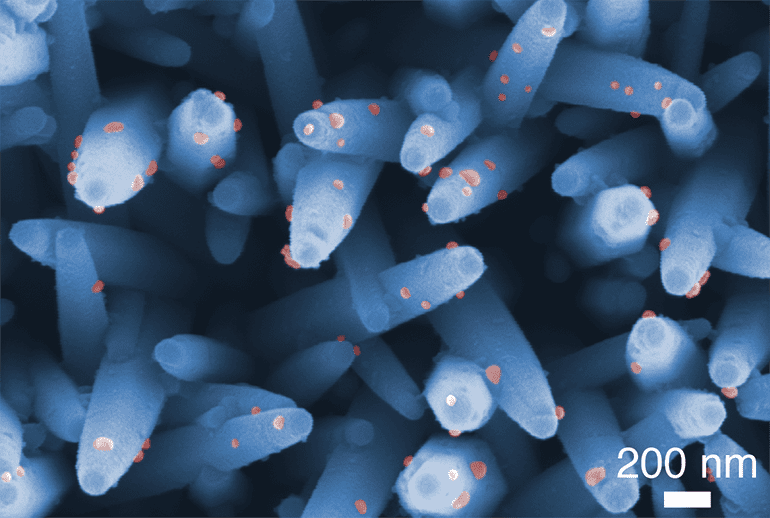
Researchers at Nagoya University in Japan have developed a nanowire assay that can be used to capture and detect specific extracellular vesicles in a urine sample that indicate the presence of a brain tumor. These extracellular vesicles are naturally excreted in the urine but techniques to capture and analyze them have been complex, requiring different pieces of equipment, until now. This all-in-one assay uses a simple well plate that has been coated with zinc oxide nanowires that extracellular vesicles are attracted to because of their surface electrical charge. Then, the researchers can detect tumor-specific extracellular vesicles in each well using […]…

Continue Reading
95% of Certified Health IT Developers Met ONC Cures Act Deadline

95% of Certified Health IT Developers Met ONC Cures Act Deadline

– More than 95 percent of certified health IT developers met the Cures Act Final Rule compliance deadline to provide customers with new technology, according to an ONC HealthITBuzz blog post. The Cures Act Final Rule mandated many changes to the Certification Program, including four updates set to have long-lasting interoperability impacts on patients, clinicians, and developers. ONC Certified Health IT developers must: Advance interoperability for patients and providers through the use of FHIR-based application programming interfaces (APIs);Enable patients, providers, and other stakeholders to have access to consistent data elements represented in at least version one of the United States Core…

Continue Reading
How Mental Healthcare Access can Improve to Meet Patient Needs

How Mental Healthcare Access can Improve to Meet Patient Needs

– Meeting patient needs for mental healthcare access will require industry leaders, clinicians, and healthcare policymakers to focus on giving clinicians the tools needed to meet patients in any care setting, as well as enable more ample access to mental healthcare providers, according to a new paper from the Alliance for Patient Access (AfPA). More patients than ever are seeking mental healthcare, with AfPA citing figures that 53 million Americans now live with some kind of mental illness. Exacerbated by the COVID-19 pandemic, this prevalence of mental illness has pushed the mental health space to face unheard-of patient demand. But patients…

Continue Reading
3D Bioengineered Skin Grafts Fit Complex Anatomy

3D Bioengineered Skin Grafts Fit Complex Anatomy

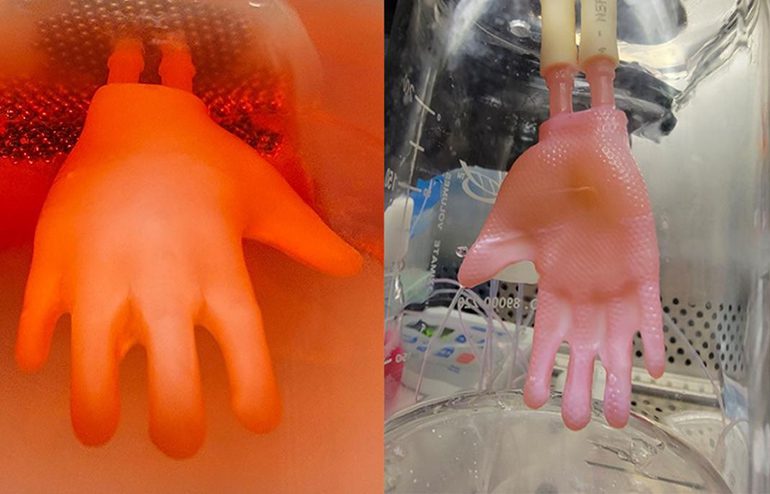
Researchers at Columbia University’s Irving Medical Center have developed a method to create three-dimensional bioengineered skin grafts. To date, bioengineered skin is typically created in flat sheets. However, these are difficult to fit to complex anatomy, such as the hand, and so these researchers have designed a more sophisticated technique that combines laser scanning, 3D printing, and cell culture to create seamless three dimensional skin grafts. For instance, the researchers have already created a skin “glove” that could be useful in replacing skin on the hands by simply slipping it over the hand (just like a glove). Replacing skin that has…

Continue Reading
EHR-based SDOH Screening Accuracy Falls Short for Housing Instability

EHR-based SDOH Screening Accuracy Falls Short for Housing Instability

– EHR-based social determinant of health (SDOH) screening questionnaires under identified patients with housing instability and financial strain compared to single-domain screening tools, according to a study published in JAMA. Public health, healthcare delivery organizations, federal agencies, and researchers have advocated for better collection of patient SDOH data. Social factors can influence referrals to community partners, increase awareness of patient needs, measure population health, and improve risk prediction models. Popular EHR platforms include multidomain screening questionnaires assessing SDOH. Researchers evaluated the accuracy of EHR-based questionnaires using single-domain questionnaires on food insecurity, housing instability, and financial strain as external standards. The study…

Continue Reading

How Spiritual Care Impacts the Mental Health of Family Caregivers

How Spiritual Care Impacts the Mental Health of Family Caregivers

– Acting as a family caregiver, who often takes on the role of surrogate decision-maker, can lead to elevated stress and anxiety caused by the patient prognosis and complex medical decisions needed to be made. According to a recent Regenstrief Institute study, spiritual care interventions can effectively support the mental health and well-being of family caregivers. Family caregivers in the intensive care unit (ICU) will make critical healthcare decisions on behalf of patients who may be incapacitated or critically ill and unable to make their own decisions. The study, published in the Journal of Pain and Symptom Management, examined the well-being…

Continue Reading
How Technology Streamlines Referral Management, Specialty Care Access

How Technology Streamlines Referral Management, Specialty Care Access

– On paper, the patient referral process can sound almost like a prescription. One biopsy. One second opinion. One visit to a specialist. In reality, referral management is a logistical and patient experience challenge, one that requires streamlined care coordination from start to finish. Getting a referral isn’t uncommon. According to a 2018 report from the Institute for Healthcare Improvement and the National Patient Safety Foundation, there are nearly 100 million subspecialty referral requests made from ambulatory centers each year. Despite referrals being common, they can still be jarring for the patient. Patients receiving referrals for mammograms might not be focused…

Continue Reading