


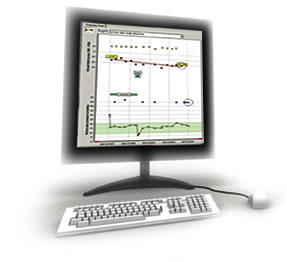
 The volume of information involved in healthcare is growing at lightning speed, and this tremendous growth has created a serious gap between knowledge and clinical practice that experts say could be narrowed with the use of information technology (IT). According to the American Medical Informatics Association, "informatics has to do with all aspects of understanding and promoting the effective organization, analysis, management, and use of information in healthcare." IT facilitates the transfer of data about appropriate drugs, specific diseases, and patient characteristics so that it can be easily accessed and used at the point of care.
The article from the American Society of Health-System Pharmacists 2007 Midyear Clinical Meeting discusses the relationship between Informatics and Clinical Decision Support.
The IOM and the Institute for Safe Medication Practices (ISMP) have recommended that healthcare organizations eliminate most handwritten clinical data, including medication orders, monitoring, and prescriptions. Technologies that can facilitate this transition include:
- Computerized prescriber order entry (CPOE), which allows prescribers to enter orders directly into an electronic system;
- Clinical decision support (CDS) tools that provide information and recommend treatments to prescribers at the point of care;
- Electronic medical records (EMRs), which can integrate information from CPOE, CDS, and other systems;
- "Smart pumps" that represent a new generation of infusion technology that can "check" programming against predefined limits and log alerts; and
- Bar-coded medication administration (BCMA), which matches a bar code on each medication to another barcode on the patient's wristband, to ensure that the right patient receives the right drug.
Pharmacists are ideally suited to help implement informatics initiatives within healthcare systems because of their unique expertise in medication use. In fact, experts say that pharmacist involvement is critical. In recognition of this, the American Association of Colleges of Pharmacy has mandated inclusion of informatics competencies at schools of pharmacy, and schools are moving quickly to comply.
Clinical Decision Support
Many new technologies represent changes to the physical medication administration process. In contrast, CDS tools represent a change in the decision-making aspect of the medication process; as a result, opinions about these tools' value can be quite varied.
CDS is defined as "providing clinicians or patients with clinical knowledge and patient-related information, intelligently filtered or presented at appropriate times, to enhance patient care." CDS programs can automate daily functions and streamline services within healthcare organizations. In its simplest form, CDS can be a collection of electronic rules and alerts; however, to provide the biggest impact, it should have more advanced operations (Table 1).
Table 1. CDS Interventions
| Basic |
| • Drug-allergy checking |
| • Basic dosing guidance in CPOE |
| • Formulary decision support |
| • Checking for duplicate therapy |
| • Drug-drug interaction checking |
| Advanced |
| • Documentation templates (history and physical, clinic visit progress note) |
| • Relevant data presentation (flowsheets) |
| • Order creation facilitators (order sets) |
| • Protocol Support (clinical pathways) |
| • Reference information (info buttons) |
| • Unsolicited alerts (proactive warnings) |
| • Advanced dosing guidance (incorporating patient information) |
| • Advanced checking of drug-disease interactions and contraindications |
CDS systems have the potential to improve "broken" aspects of the healthcare system such as safety, quality, and affordability. Specifically, these tools can help increase guideline adherence, decrease medication errors, increase surveillance and monitoring, improve resource utilization, and save money, he said.
Alert fatigue is a phenomenon that occurs when numerous alerts bombard the user and lead them to override the warnings. Obviously, ignored alerts can limit the value of a CDS system and can negatively influence patient care. This problem may be partly related to "out-of-the-box" system configurations that are not customized to a specific work environment. Vendors are aware of this issue and are trying to address it, Dr. Osheroff said. Without accepted standards and benchmarks, however, it is difficult to determine a threshold for alerts while balancing legal liability.
How Will This Affect Clinical Pharmacy?
Despite the potential benefits of new technologies, the remaining challenges have made some question whether these tools are really beneficial in their current state. At a session entitled, "Debating Key Issues in Technology," experts discussed whether CDS is a boon or bane to pharmacy. To frame the discussion, CDS was defined as automated alerts commonly seen in CPOE systems, drug information software, and clinical alerts built into pharmacy systems to detect adverse events and suggest monitoring.
"CDS is good for clinical pharmacy because it is good for patients," Dr. Levin concluded. She gave 3 examples to illustrate her point:
- CDS saves time. An expected shortfall of 157,000 pharmacists by the year 2020 demands that available personnel work more efficiently. "Pharmacists spend a lot of time hunting and gathering information," she said, and while technology alone may not solve the pharmacist shortage, CDS systems can alleviate some of the strain. Having actionable data available at the point of decision-making is critical. Using CDS in an automated environment will save time not only for pharmacists, but also for other clinicians. Consider the reports that are printed for switching patients from intravenous (IV) to oral drug formulations. The reports are typically lengthy and require sifting through the document to determine which patients meet the criteria. CDS tools can automate the process and print a list of only the eligible patients, thus eliminating the time-intensive screening process.
- CDS decreases variation. Individualized decision making can be both variable and incorrect, whereas computerized protocols can reduce variation and increase compliance with clinical guidelines. Reducing variation increases the quality of patient care and improves patient outcomes, Dr. Levin said.
- CDS is evidence-based. CDS alerts and reminders are constructed from numerous guidelines, protocols, and algorithms. They serve as electronic recommendations that can help clinicians select appropriate medications and doses, as well as informing them of monitoring parameters.
On the other hands, CDS could lead to a "cessation of analytical thought," Mr. Smith said. Due to the black-and-white nature of creating rules for CDS programs, people might forget that the practice of clinical pharmacy is often gray. This gray area requires a level of discernment provided by clinical pharmacists that is not reproducible by the technology that exists today. The problem with using CDS to help physicians make better clinical decisions is that, if the programmed rules miss the grey areas, patient care could be compromised.
Arguing against the use of CDS is not "politically correct," Mr. Smith said, but he believes the tools that exist today "are not cooked yet" and are unable to ensure equivalent outcomes to care provided with input from clinical pharmacists. Until these programs mature, clinical pharmacists should be wary of implementing them without reinforcing their own value to administrators. Pharmacists need to develop these arguments "before our positions are cut that we will need later," he said.
Get the full text article at Medscape http://www.medscape.com/viewarticle/571099
| < Prev | Next > |
|---|



 In this section you'll find a list of companies and organizations working in the healthcare IT sector in Egypt.