Data Overload & Legal Liability Concerns
Sunday, 27 April 2008 01:07
Dr. Hazem El-Oraby
 Personal Health Records are becoming increasingly popular in the US as a way for patients to more effectively manage their own health status. However this article published in Modern Healthcare Online points to concerns of physicians regarding workload and legal liability. As healthcare information became more accessible via the Internet, it has not been uncommon for a patient to arrive in their physician's office with one or more printed articles for review with the physician. In a healthcare system that is already time pressured, adding in additional workload relating to personal health records may be too much for many physicians.
Last Updated ( Sunday, 27 April 2008 01:17 )
Read more...
What will an EHR do for me?
Friday, 25 April 2008 04:00
Dr. Hazem El-Oraby
 EMR Consultant provides a comprehensive list of items that the EHR will help you out with.
Last Updated ( Friday, 25 April 2008 02:32 )
Read more...
Why does healthcare need its own labeling standard?
Friday, 25 April 2008 00:10
Dr. Hazem El-Oraby
 The Health Industry Bar Code Standard was created because the health industry is unique. Unlike most other industries, healthcare products have special human safety requirements, are routinely monitored by government regulators, and are often “purchased” indirectly (through insurance claims) for patients in hospitals and other healthcare facilities. As a consequence, labels must be as error-free as possible, must contain additional information, and must satisfy greater needs than those commonly found in point-of-sale environments such as grocery check-out counters. HIBCC is the Health Industry Business Communications Council, the primary standard-setting and educational organization for bar coding in the world of healthcare. HIBCC was founded in 1983 by a consortium of national trade associations specifically to develop an approach to labeling that would fulfill the unique requirements of our industry. The Health Industry Bar Code (HIBC) Standard is the result of that effort.
Last Updated ( Friday, 25 April 2008 00:14 )
Read more...
Choosing an EMR
Wednesday, 23 April 2008 04:00
Dr. Hazem El-Oraby
 Every EMR software program has its strengths and weaknesses. The perfect EMR does not exist and never will. Even those organizations that have built their own EMR still have long lists of new enhancements and features that they wish had been included in their EMR. In selecting an EMR, it is important to match an EMR's strengths with a clinic's needs. Even more important is to acknowledge an EMR's weaknesses. Then, ask yourself whether your clinic can handle those weaknesses and how your clinic will deal with them. This article, written by John Lynn: Student Wellness Technical Specialist - University of Nevada - Las Vegas, won't tell you what EMR to select, but will just guide you on how to make your choice.
Last Updated ( Saturday, 19 April 2008 03:59 )
Read more...
Medical Transcription at your fingertips.
Tuesday, 22 April 2008 04:00
Dr. Hazem El-Oraby
 Today, healthcare facilities are seeking solutions that allow them to ensure appropriate high-cost exam ordering, more efficiently deliver results, improve communication between physicians, and analyze years of data to improve their practice. Moreover, they are looking for ways to harness the power of existing IT infrastructures.
Last Updated ( Saturday, 19 April 2008 03:00 )
Read more...
Elsevier Clinical Decision Support Database.
Monday, 21 April 2008 04:00
Dr. Hazem El-Oraby
Clinical Decision Support is quickly becoming critical to the delivery of quality patient care. Elsevier Clinical Decision Support delivers intelligence at the point of care by anticipating the clinical information needs of healthcare professionals including physicians, nurses, pharmacists and other providers. Elsevier claims they provide accurate, evidence-based, interactive and consistent answers to clinical questions whenever and wherever need within the healthcare workflow.
Last Updated ( Sunday, 04 May 2008 11:26 )
Read more...
Artificial intelligence at the core
Sunday, 20 April 2008 04:00
Dr. Hazem El-Oraby
 Lifecom claims to have developed an entirely new form of artificial intelligence technology and a supporting suite of knowledge development tools. The Lifecom technology portfolio includes novel knowledge extraction and management tools, the artificial intelligence engine, and a highly graphical user interface. Seven patents applications are pending. Lifecom claims to have developed an entirely new form of artificial intelligence technology and a supporting suite of knowledge development tools. The Lifecom technology portfolio includes novel knowledge extraction and management tools, the artificial intelligence engine, and a highly graphical user interface. Seven patents applications are pending.
Lifecom is the first portable medical software system built from the ground up to focus on the most important aspect of medical care – clinical cognition. It is the only system that anticipates error reduction mandates for which every medical practitioner is accountable. It is the only system that captures and processes patients' history, medications, symptoms, exam findings, laboratory results, vital signs, and imaging with artificial intelligence. Unlike Electronic Health Record (EHR) products, Lifecom's software does far more than store data. It tracks, processes and automatically presents all relevant clinical considerations to your doctor, nurse practitioner, physician's assistant, nurse, or medical assistant at the exact moment that the knowledge can do the most good.
Last Updated ( Tuesday, 15 April 2008 01:21 )
Read more...
Transforming Healthcare With Information Technology
Saturday, 19 April 2008 04:00
Dr. Hazem El-Oraby
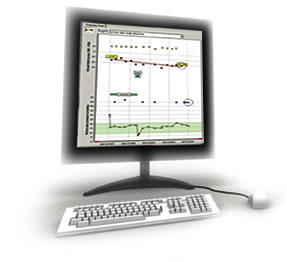 The volume of information involved in healthcare is growing at lightning speed, and this tremendous growth has created a serious gap between knowledge and clinical practice that experts say could be narrowed with the use of information technology (IT). According to the American Medical Informatics Association, "informatics has to do with all aspects of understanding and promoting the effective organization, analysis, management, and use of information in healthcare." IT facilitates the transfer of data about appropriate drugs, specific diseases, and patient characteristics so that it can be easily accessed and used at the point of care. The volume of information involved in healthcare is growing at lightning speed, and this tremendous growth has created a serious gap between knowledge and clinical practice that experts say could be narrowed with the use of information technology (IT). According to the American Medical Informatics Association, "informatics has to do with all aspects of understanding and promoting the effective organization, analysis, management, and use of information in healthcare." IT facilitates the transfer of data about appropriate drugs, specific diseases, and patient characteristics so that it can be easily accessed and used at the point of care.
The article from the American Society of Health-System Pharmacists 2007 Midyear Clinical Meeting discusses the relationship between Informatics and Clinical Decision Support.
Last Updated ( Monday, 14 April 2008 13:53 )
Read more...
The Next Generation of Medical Informatics for Patient Safety
Friday, 18 April 2008 04:00
Dr. Hazem El-Oraby
 In this article the hospital rules-based system (HRBS) and its subsystems at a major medical center are described. The HRBS was implemented at the Mayo Clinic to rapidly identify and communicate crucial information to the clinician in order to optimize patient care. The system also enhances workload efficiency and improves documentation and communication. The system is used by the infectious-diseases division, pharmacy services, nutritional support services, infection control, and the nursing department. The six HRBS subsystems are Web-based programs that share a common structural design and integrate computerized information from multiple institutional databases. The integrated data are presented in a user-friendly format that improves the efficiency of data retrieval. Information, such as monitoring notes and intervention information, can be entered for specific patients. The subsystems use rules designed to detect suboptimal therapy or monitoring and identify opportunities for cost savings in a timely manner.
Last Updated ( Friday, 18 April 2008 22:35 )
Read more...
Medical Informatics I: Principles of Database Design
Thursday, 17 April 2008 04:00
Dr. Hazem El-Oraby
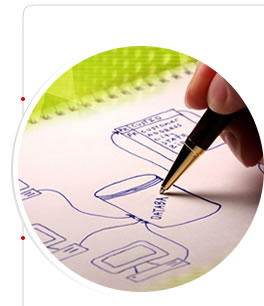 This lecture was delivered as part of a week-long survey course designed to familiarize individuals with the application of computer technologies and information science in medicine. The course a National Library of Medicine fellowship program directed at medical educators, medical librarians, medical administrators, and young faculty who are not currently knowledgeable but can become agents of change in their institutions. This lecture was delivered as part of a week-long survey course designed to familiarize individuals with the application of computer technologies and information science in medicine. The course a National Library of Medicine fellowship program directed at medical educators, medical librarians, medical administrators, and young faculty who are not currently knowledgeable but can become agents of change in their institutions.
"[Medical Informatics] is the science of organizing information to make it useful, to make it retrievable, so people can use it to solve health problems and understand health and disease better. It is the technology for implementing that science, such as databases, communication networks, and other forms of digital tools.
We are increasingly surrounded by so much information that only computers provide a plausible way to keep it under control and find out the facts that we need. That is what medical informatics is about."
Dan Masys, interview at MBL, May 2001
Last Updated ( Saturday, 01 June 2013 23:23 )
Read more...
|
|


 Blog
Blog

 DrugFormatica
 ProcFormatica
 PsychFormatica
 In this section you'll find a list of companies and organizations working in the healthcare IT sector in Egypt.