Pre-population of Templates with 'Normal' Values can Result in Risk to Patient Care
Tuesday, 06 May 2008 04:00
Dr. Hazem El-Oraby
 The BC College of Physicians and Surgeons 'College Quarterly' highlighted a case in which the pre-population of templated responses with default 'normal' responses potentially contributed to errors in detection of a medical condition in a young child that resulted in a fatal arrhythmia. Another deficiency was an ineffective recall capability in the EMR that was being used. This case highlights the need for safe and usable tools if situations such as this are to be avoided.
Last Updated ( Saturday, 03 May 2008 05:35 )
Read more...
Instant access critical medical data over the air
Monday, 05 May 2008 04:00
Dr. Hazem El-Oraby
 The AirStrip OBSERVER SuiteTM offers mobile solutions that give doctors the ability to access critical medical data on a mobile device anywhere they have a cell phone connection. By providing this type of anytime, anywhere access, the AirStripTM products greatly increase patient safety, improve communication among caregivers and mitigate risk for hospitals, doctors and patients. The AirStripTM core data transmission engine facilitates the transfer of real-time, medical waveform data to a Cell Phone (Smartphone) or PDA over a cell phone network. The AirStripTM technology is patent pending and FDA cleared. The technology is currently marketed in the US with the AirStrip OBTM solution strategic partners as a remote surveillance solution in the hospital labor and delivery environment. The AirStripTM technology was developed by AirStrip TechnologiesTM, a San Antonio, Texas based company which specializes in the development of mobile and remote surveillance applications that increase patient safety, improve communication among caregivers and mitigate risk for hospitals, doctors and patients. The AirStrip OBSERVER SuiteTM offers mobile solutions that give doctors the ability to access critical medical data on a mobile device anywhere they have a cell phone connection. By providing this type of anytime, anywhere access, the AirStripTM products greatly increase patient safety, improve communication among caregivers and mitigate risk for hospitals, doctors and patients. The AirStripTM core data transmission engine facilitates the transfer of real-time, medical waveform data to a Cell Phone (Smartphone) or PDA over a cell phone network. The AirStripTM technology is patent pending and FDA cleared. The technology is currently marketed in the US with the AirStrip OBTM solution strategic partners as a remote surveillance solution in the hospital labor and delivery environment. The AirStripTM technology was developed by AirStrip TechnologiesTM, a San Antonio, Texas based company which specializes in the development of mobile and remote surveillance applications that increase patient safety, improve communication among caregivers and mitigate risk for hospitals, doctors and patients.
Last Updated ( Sunday, 27 November 2022 10:09 )
Read more...
Debunking EMR Myths
Sunday, 04 May 2008 04:00
Dr. Hazem El-Oraby
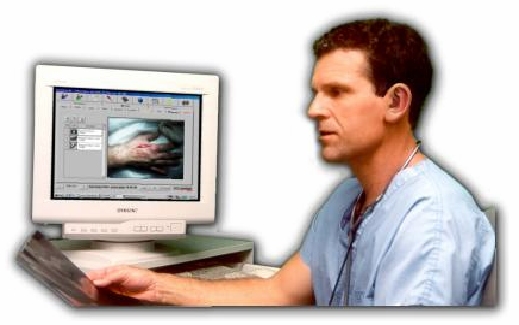 Only some 10 percent of physician practices have automated their clinical recordkeeping, according to most estimates. Hospitals, too, remain burdened under the heavy yoke of paper charts. Many run partially automated, hybrid electronic-paper environments. Like Holly, executives involved in hospital deployments invariably can talk at length about the misconceptions of advancing documentation into the modern age. Here are five common EMR myths. This interesting article was published in HealthLeaders Media (US publication) in November 2006 and lists a number of myths relating to EMR selection and implementation. Here goes...
Last Updated ( Saturday, 03 May 2008 05:00 )
Read more...
Pioneering long-distance care
Saturday, 03 May 2008 04:39
Dr. Hazem El-Oraby
 Trauma surgeon Dr. Scott Dulchavsky isn't looking to take away from the adrenaline-infused thrill of climbing Mount Everest. He simply wants to ensure that those who make the trek to the world's highest peak do so in good health. That was his charge last Monday when from his laptop back in the United States, Dulchavsky guided a group of Canadian alpinists through a physical check-up via a satellite link. The climbers, who at the time were nearly two-thirds their way to the summit, used a portable ultrasound machine -- about the same size of a laptop -- to scan parts of their body and send the images to Dulchavsky.
Last Updated ( Saturday, 03 May 2008 04:39 )
Read more...
Physician Friendly EMR
Friday, 02 May 2008 04:00
Dr. Hazem El-Oraby
 Work continues at UT Southwestern Medical Center University Hospitals in our journey towards an electronic medical record. Implementation teams continue to make progress on the application builds of the pharmacy, anesthesia pre-operative assessments and emergency department systems. Though we've had some setbacks on our projects, we continue to be hopeful that we are on track for the upcoming go-lives. November marked the first month of heavy physician involvement in the design and implementation of the EMR. Led by our chief medical officer and vice president of clinical quality, we have physician workgroups addressing physician order entry and results review. Both groups have made significant progress on their respective projects, but this work has re-opened some longstanding wounds in physician relations with our IT department. As electronic medical records evolve, the focus turns to making them more user-friendly, an interesting article by Suresh Gunasekaran.
Last Updated ( Friday, 02 May 2008 05:01 )
Read more...
Handy Patients
Thursday, 01 May 2008 04:00
Dr. Hazem El-Oraby
 With the Handy patients program you can rapidly and professionally record all medical information about your patients, their progress, and their examinations. The software has wonderful tools that can be fully personalized for any kind of medical specialty including internal medicine, critical care, surgery, pediatrics, gynecology, psychiatry or even physiotherapy. This new version is now so optimized that it's more powerful than most of the existing desktop PC patient trackers and is the best one available for a PDA. This software is now compatible with PocketPC, DesktopPC and TabletPC. Thanks to its large number of tools, the software summarizes the patients' information in a very structured and academic way. Doctors in hospitals will love this software. During patient visits, it will be possible to easily retrieve information about them and update their information methodically during the meeting with an incomparable precision. It is easy to use and very intuitive with an unusually pleasant interface and working environment that is rare to find in such advanced patient tracking systems.
Last Updated ( Friday, 02 May 2008 02:30 )
Read more...
'Expressway' Software to Help Healthcare Providers Reduce Integration and Interoperability Costs
Wednesday, 30 April 2008 04:00
Dr. Hazem El-Oraby
 Intel Corporation announced Intel® SOA Expressway for Healthcare, software that provides an efficient way to exchange healthcare information inside hospitals and with health information networks. The product will allow healthcare providers to more easily connect with one another so that each can provide better care while benefiting from reduced integration costs. Intel Corporation announced Intel® SOA Expressway for Healthcare, software that provides an efficient way to exchange healthcare information inside hospitals and with health information networks. The product will allow healthcare providers to more easily connect with one another so that each can provide better care while benefiting from reduced integration costs.
Last Updated ( Sunday, 27 April 2008 02:18 )
Read more...
Microsoft Dynamics for healthcare
Tuesday, 29 April 2008 04:00
Dr. Hazem El-Oraby
 Microsoft Dynamics GP is a fully integrated financial and business-management solution that can help healthcare organizations transform the way they record, track, and access critical business information. Built to deliver the highest levels of ease-of-use, it offers integrated, cost-effective systems for healthcare delivery, helping to standardize and exchange financial information between entities. Microsoft Dynamics GP is a fully integrated financial and business-management solution that can help healthcare organizations transform the way they record, track, and access critical business information. Built to deliver the highest levels of ease-of-use, it offers integrated, cost-effective systems for healthcare delivery, helping to standardize and exchange financial information between entities.
Today, Microsoft Dynamics GP is used by 38,000 companies around the world, including a fast-growing number of hospitals, clinics, and long-term care facilities. Backed by Microsoft award-winning customer service, it's enabling healthcare providers to improve their financial and business processes, and ultimately deliver more cost-effective healthcare. Read on to find out why it's a sound choice for organizations in the healthcare industry.
Last Updated ( Sunday, 27 April 2008 02:04 )
Read more...
The Leapfrog Hospital Survey
Monday, 28 April 2008 04:00
Dr. Hazem El-Oraby
 The Leapfrog Hospital Survey is divided into eight sections. The first section asks you to provide general information about your hospital. Sections two, three, five, and six are meant to determine whether or not your hospital has fully implemented or plans to implement fully The Leapfrog Group’s recommended quality and safety practices (leaps) including: Computer Physician Order Entry, Evidence-Based Hospital Referral, ICU Physician Staffing, and thirteen of the remaining National Quality Forum Safe Practices. Sections four and seven are meant to The Leapfrog Hospital Survey is divided into eight sections. The first section asks you to provide general information about your hospital. Sections two, three, five, and six are meant to determine whether or not your hospital has fully implemented or plans to implement fully The Leapfrog Group’s recommended quality and safety practices (leaps) including: Computer Physician Order Entry, Evidence-Based Hospital Referral, ICU Physician Staffing, and thirteen of the remaining National Quality Forum Safe Practices. Sections four and seven are meant to demonstrate a hospital’s adoption of key safety practices. The eighth and final section provides additional opportunity for hospitals to be recognized for having a Never Events policy and for other public reporting initiatives.
Last Updated ( Sunday, 27 April 2008 01:40 )
Read more...
Simulating surgery to reduce implant complications
Sunday, 27 April 2008 04:00
Dr. Hazem El-Oraby
 Each year surgeons across Europe perform a staggering 900,000 hip, knee and spinal implant operations. Implant surgery is one of the most remarkable advances in medical science. Such operations restore increased mobility and a vastly improved quality of life to millions of Europeans. Each year surgeons across Europe perform a staggering 900,000 hip, knee and spinal implant operations. Implant surgery is one of the most remarkable advances in medical science. Such operations restore increased mobility and a vastly improved quality of life to millions of Europeans.
A computer simulation breakthrough could mean fewer medical complications and better surgical outcomes for patients undergoing hip, knee or spinal implant surgery.
Last Updated ( Sunday, 27 April 2008 01:21 )
Read more...
|
|


 Blog
Blog

 DrugFormatica
 ProcFormatica
 PsychFormatica
 In this section you'll find a list of companies and organizations working in the healthcare IT sector in Egypt.