




Author: JMIR mHealth and uHealth
Comparison of ActiGraph CentrePoint Insight Watch Placement on Dominant and Nondominant Wrists in Young Adults in Free-Living Conditions: Observational Validation Study
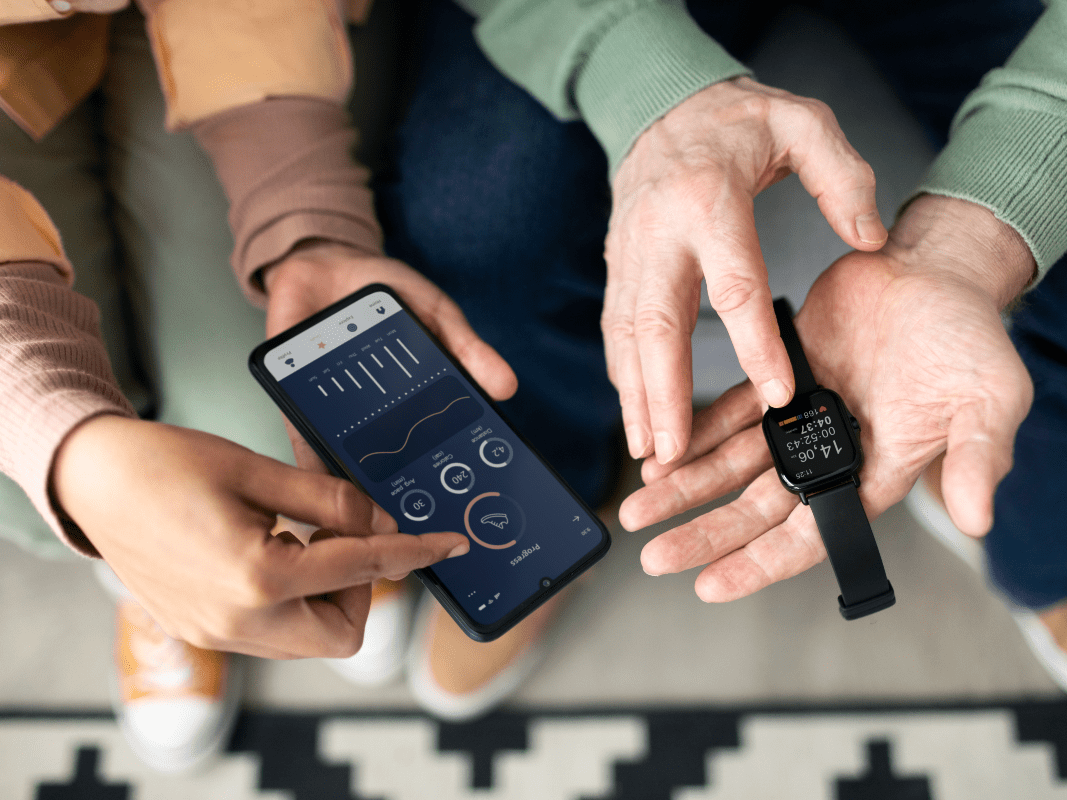
Background: With the continuous evolution of technology, wearable accelerometers have become one of the most popular means of measuring daily physical activity (PA) levels. Despite the conventional use of the non-dominant wrist as a…
Continue ReadingEffects of Information Length and Implementation Intentions on Adherence to Weight Management Strategies: Experimental Study
Background: Adherence to weight management strategies may be undermined where lengthy strategy explanations limit engagement and understanding, weakening intervention efficacy. By contrast, implementation intentions have been shown to promote adherence across various health behaviours….
Continue ReadingHealth Care Workers’ Experience With a Psychological Self-Monitoring App During the COVID-19 Pandemic: Mixed Methods Study
Background: Health care workers (HCWs) are at risk of experiencing psychological distress, particularly during the COVID-19 pandemic. Psychological self-monitoring apps may contribute to reducing symptoms of depression, anxiety, and trauma exposure by enhancing emotional…
Continue ReadingEfficacy of Mobile App–Based Dietary Interventions Among Cancer Survivors: Systematic Review and Meta-Analysis
Background: The World Health Organization recommends that cancer survivors maintain a healthy diet and weight control to prevent cancer recurrence. Albeit a growing interest in using mobile applications (apps) for health promotion, there is…
Continue ReadingMinimal Clinically Important Difference of Average Daily Steps Measured Through a Consumer Smartwatch in People With Mild-to-Moderate Parkinson Disease: Cross-Sectional Study
Background: Recent studies demonstrated the validity, reliability and accuracy of consumer smartwatches for measuring daily steps in people with Parkinson’s disease (PwPD). However, no study to date estimated the minimal clinically important difference (MCID)…
Continue ReadingPopulation-Level Dissemination of a Smoking Cessation Smartphone App: Quasi-Experimental Comparison of Values-Based Messages in Social Media Advertisements
Background: Cigarette smoking is prevalent in many countries worldwide, especially in low- and middle-income countries, presenting an urgent public health challenge. Disseminating freely available smoking cessation treatments that effectively decrease cigarette smoking globally are…
Continue ReadingGrouping Digital Health Apps Based on Their Quality and User Ratings Using K-Medoids Clustering: Cross-Sectional Study
Background: Digital health apps allow for proactive rather than reactive healthcare and have the potential to take the pressure off healthcare providers. With over 350,000 digital health apps available on the app stores today,…
Continue ReadingA Digital Software Support Platform for Hyperthyroidism Management in South Korea: Markov Simulation Model-Based Cost-Effectiveness Analysis
Background: The integration of wearable technology for heart rate monitoring offers potential advancements in managing hyperthyroidism by providing a feasible way to track thyroid function. Although digital health solutions are gaining traction in various…
Continue ReadingAssociations Between Daily Symptoms and Pain Flares in Rheumatoid Arthritis: Case-Crossover mHealth Study
Background: Pain fluctuations are common in chronic musculoskeletal conditions, with periods of increased pain severity, known as pain flares, often occurring alongside worsening disease activity. These painful episodes can lead to significant impacts, including…
Continue Reading